New edition: Subjective Atlas of Groningen
〰️
New edition: Subjective Atlas of Groningen 〰️
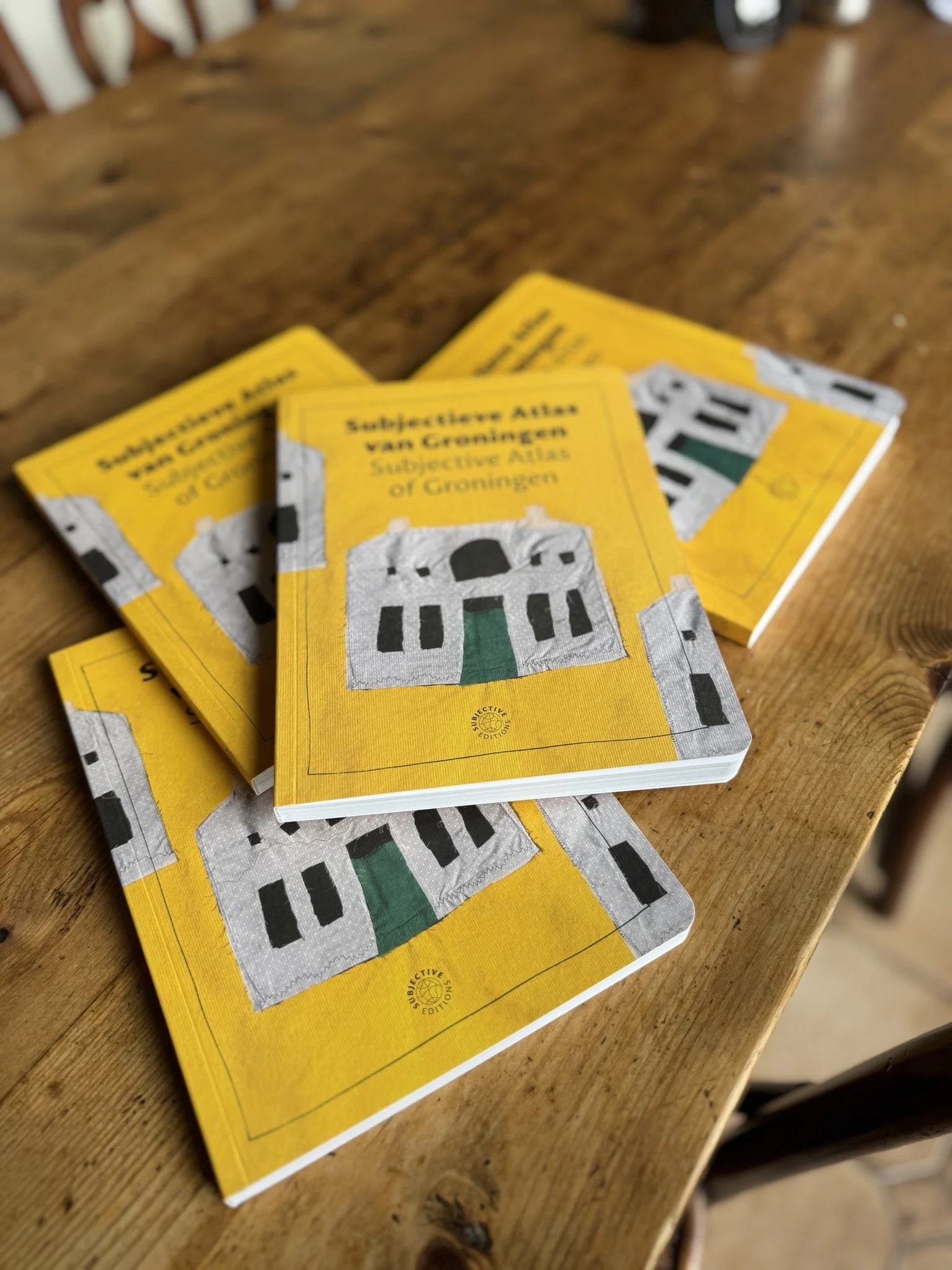
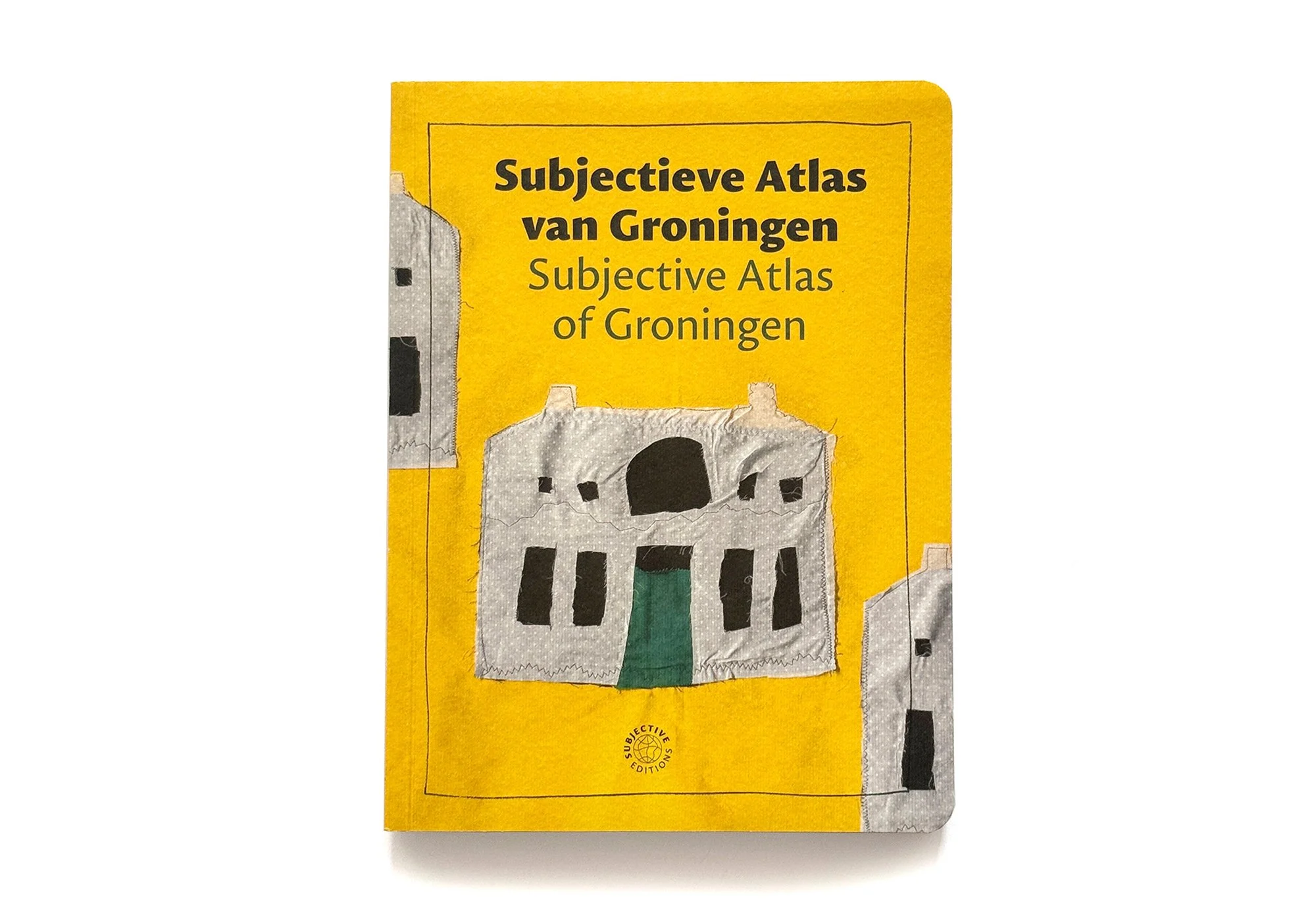
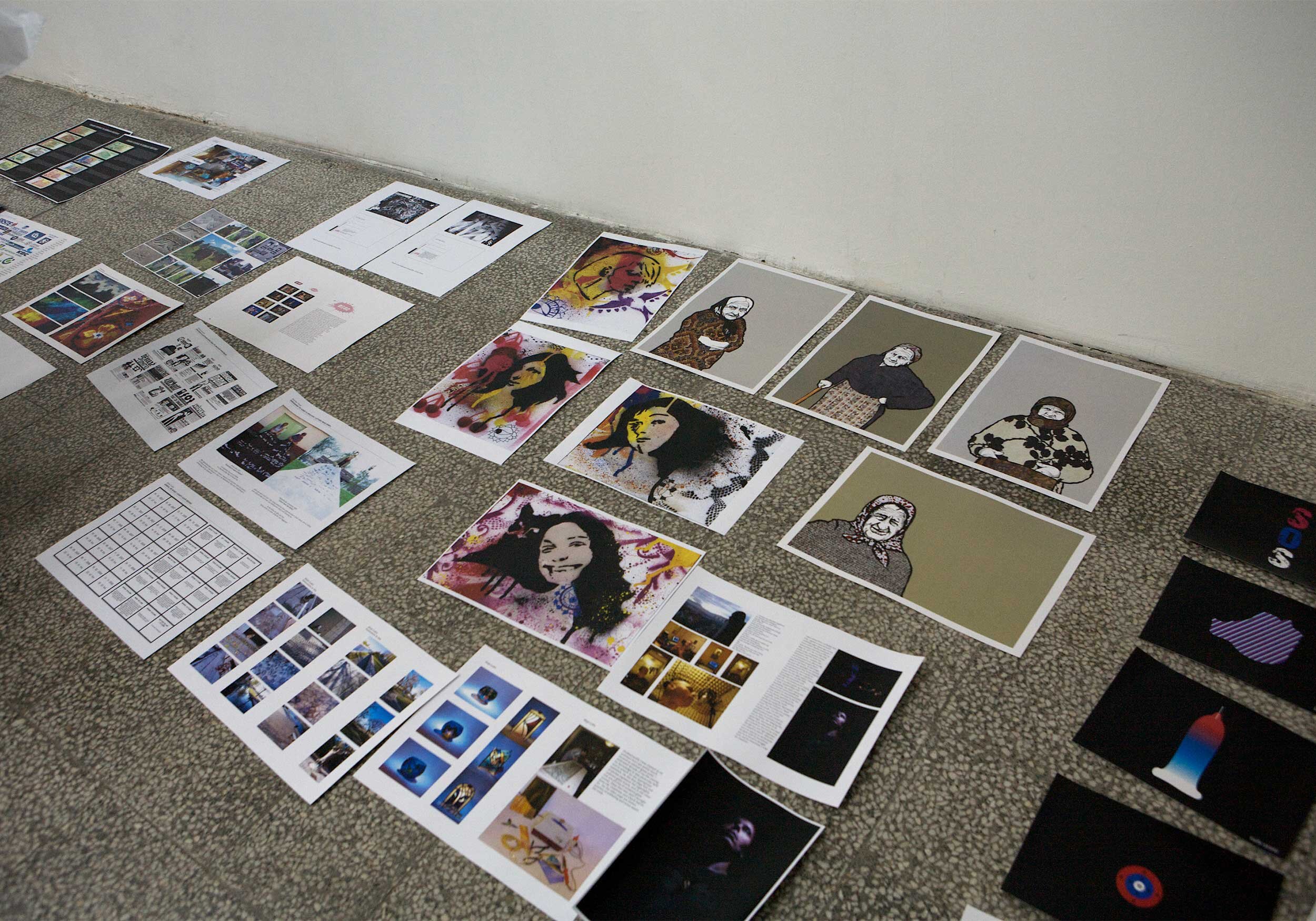
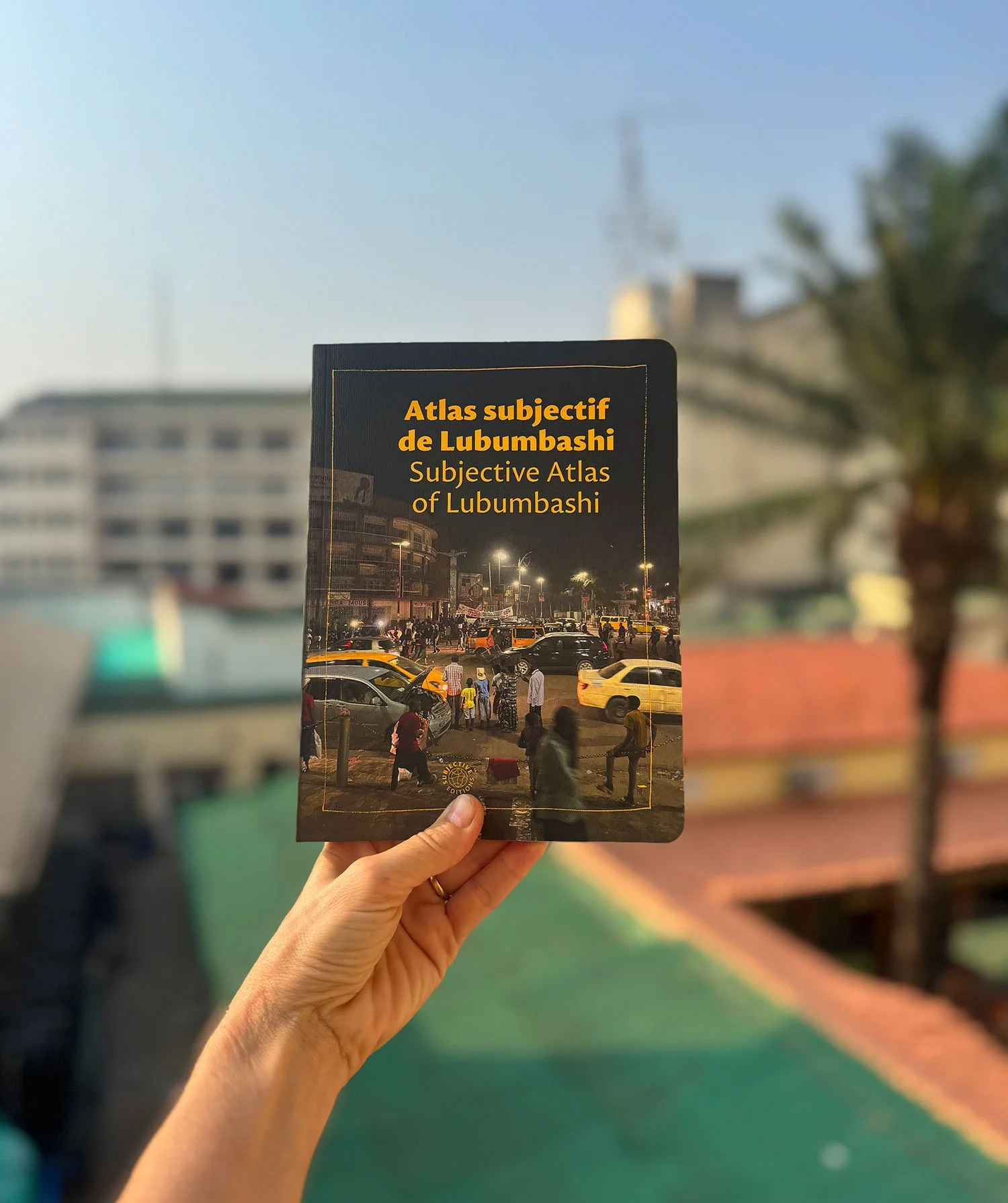
After years of working, and driven by the initiative of ARTisBOOK, the Subjective Atlas of Groningen has finally been published — a collective exploration of how home is continuously made and remade across this Northern Dutch province. The atlas gathers over 100 perspectives, developed across ten workshops organised by partner organisations throughout the province. Together, participants explored what it means to feel at home in Groningen — in all its personal, particular, and often unspoken dimensions.
To celebrate, we warmly invite you to two events in Groningen:
Saturday 6 June: Bus tour through the province
Sunday 7 June 3pm: Book launch at Forum Groningen
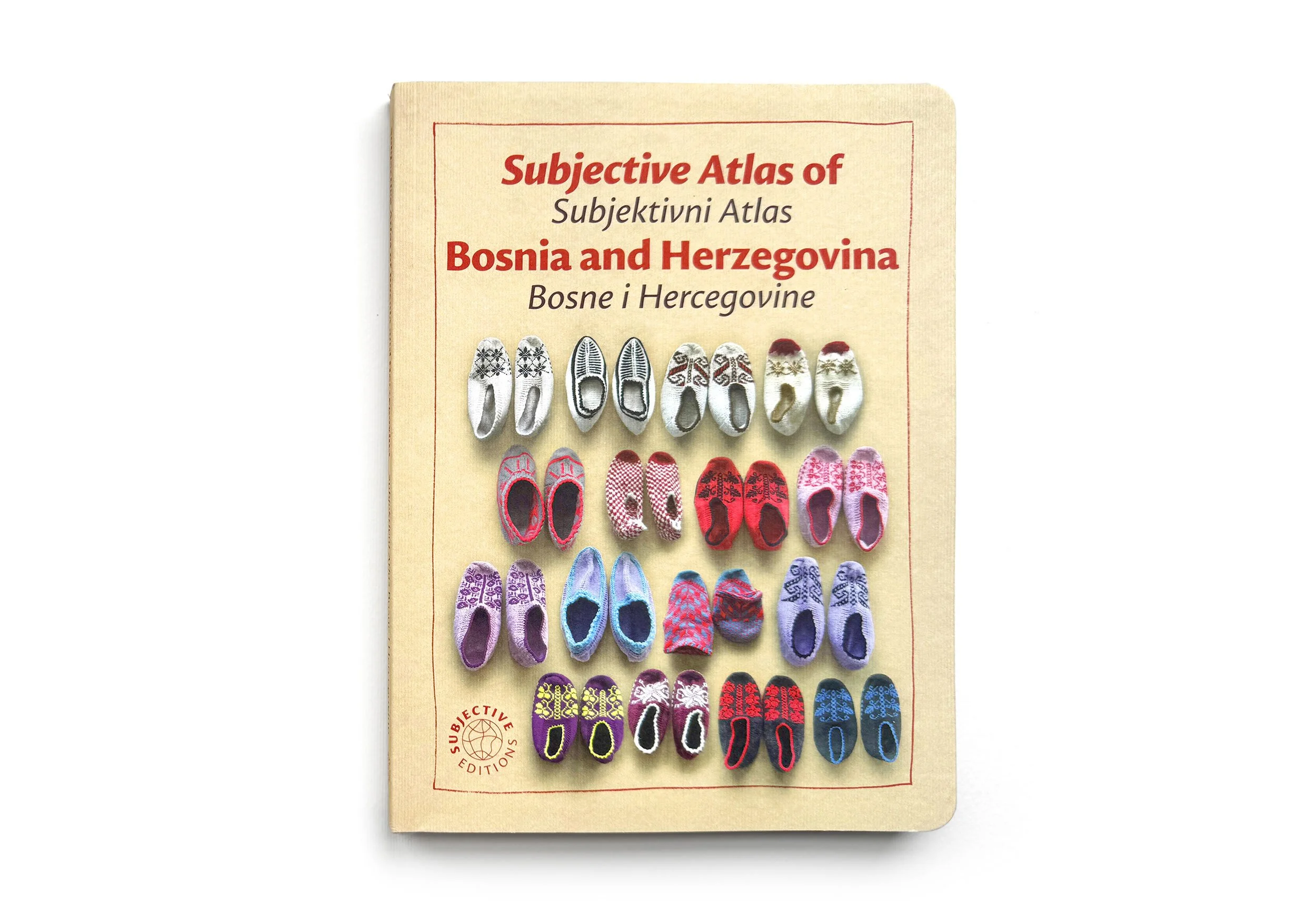
Post Conflict Research Centre (PCRC) & Subjective Editions & Newcastle University proudly announce the release of the Subjective Atlas of Bosnia and Herzegovina, a new publication that reimagines how this charged country can be seen and felt — through the eyes of its people. The Subjective Atlas of Bosnia and Herzegovina was launched on Wednesday, 3 December 2025, with an accompanying exhibition at Vijećnica (Sarajevo City Hall).
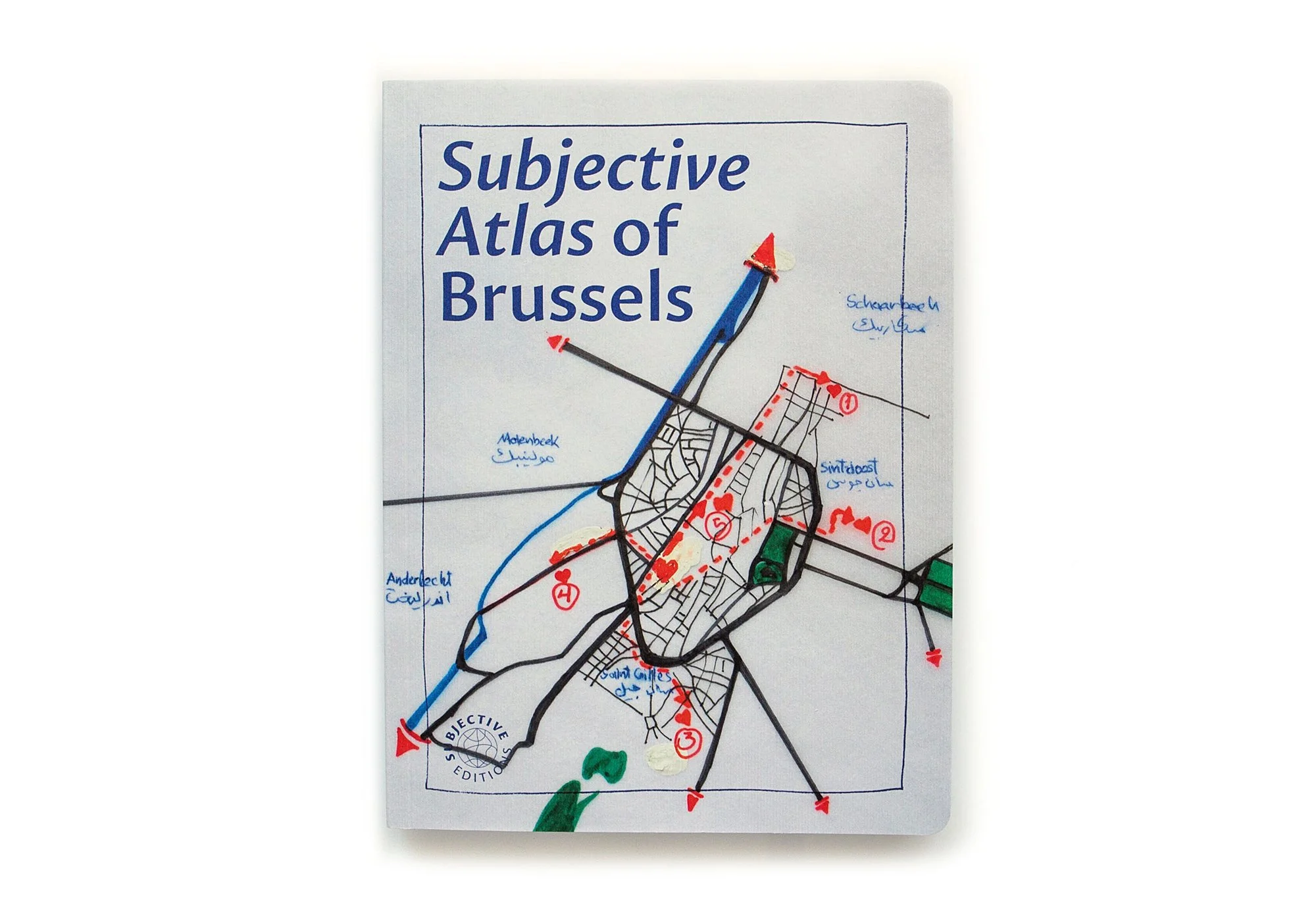
In autumn 2025, we moved into our new studio in the heart of Brussels. To mark this moment, Balázs Kulcsár from the interview platform Paris–Budapest–Metro spoke with Subjective Editions founder Annelys de Vet about the making of the Subjective Atlas of Brussels and the city itself. In this video interview, she reflects on the processes, questions, and collaborations that shaped the atlas.
Agenda
Booklaunch Subjective Atlas of Groningen
Bus Tour Subjective Atlas of Groningen
Entre les lignes
Framer Framed Book Fair
Subjective atlases
ARTisBOOK & Subjective Editions, 2026
Dutch-English, 192 full-colour pages, 16.5 x 22 cm
—
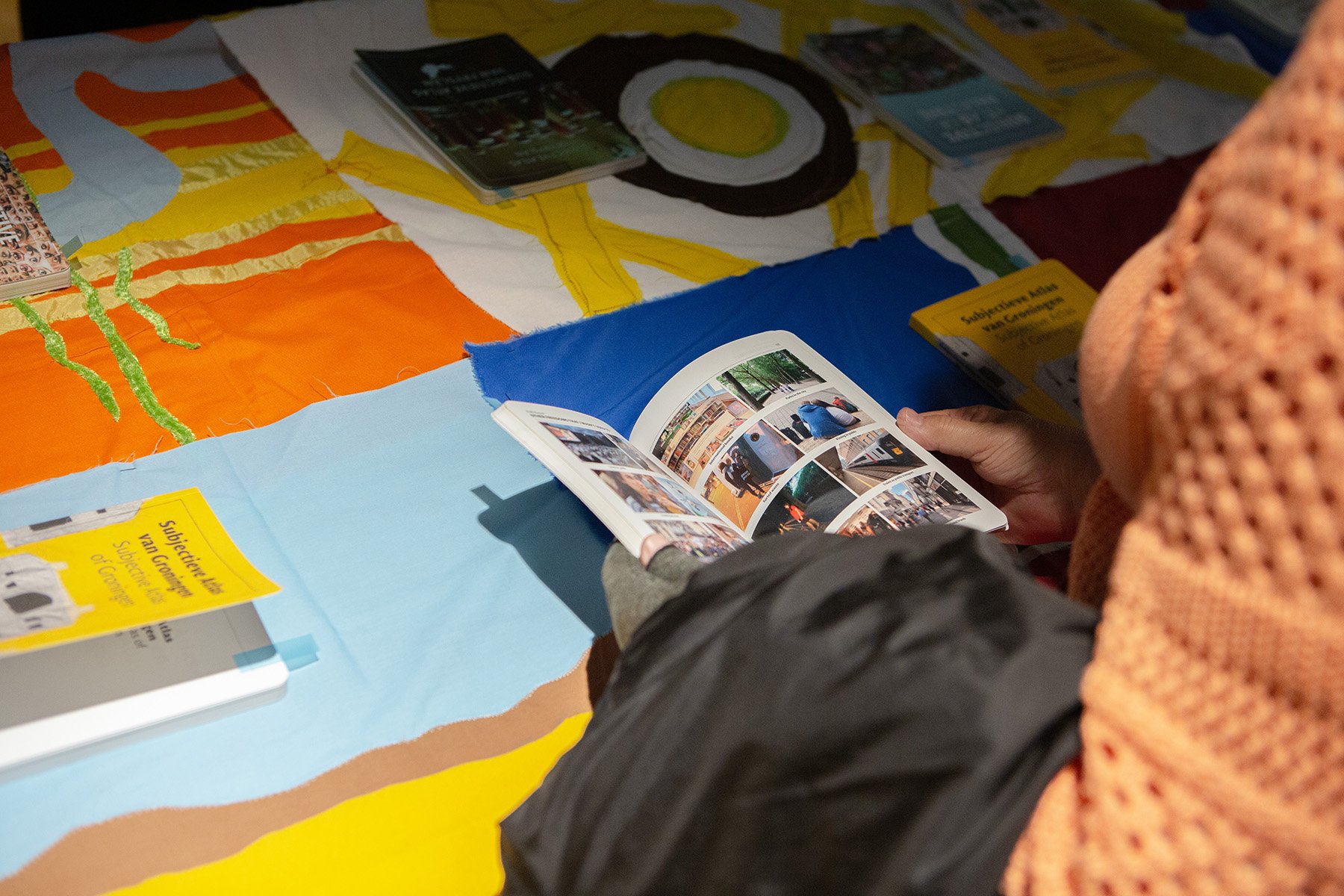
The Subjective Atlas of Groningen brings together a diverse group of Groningers mapping the province and what it means to be “at home,” in order to share and make visible the personal, but often invisible, experiences of various resident groups in Groningen.
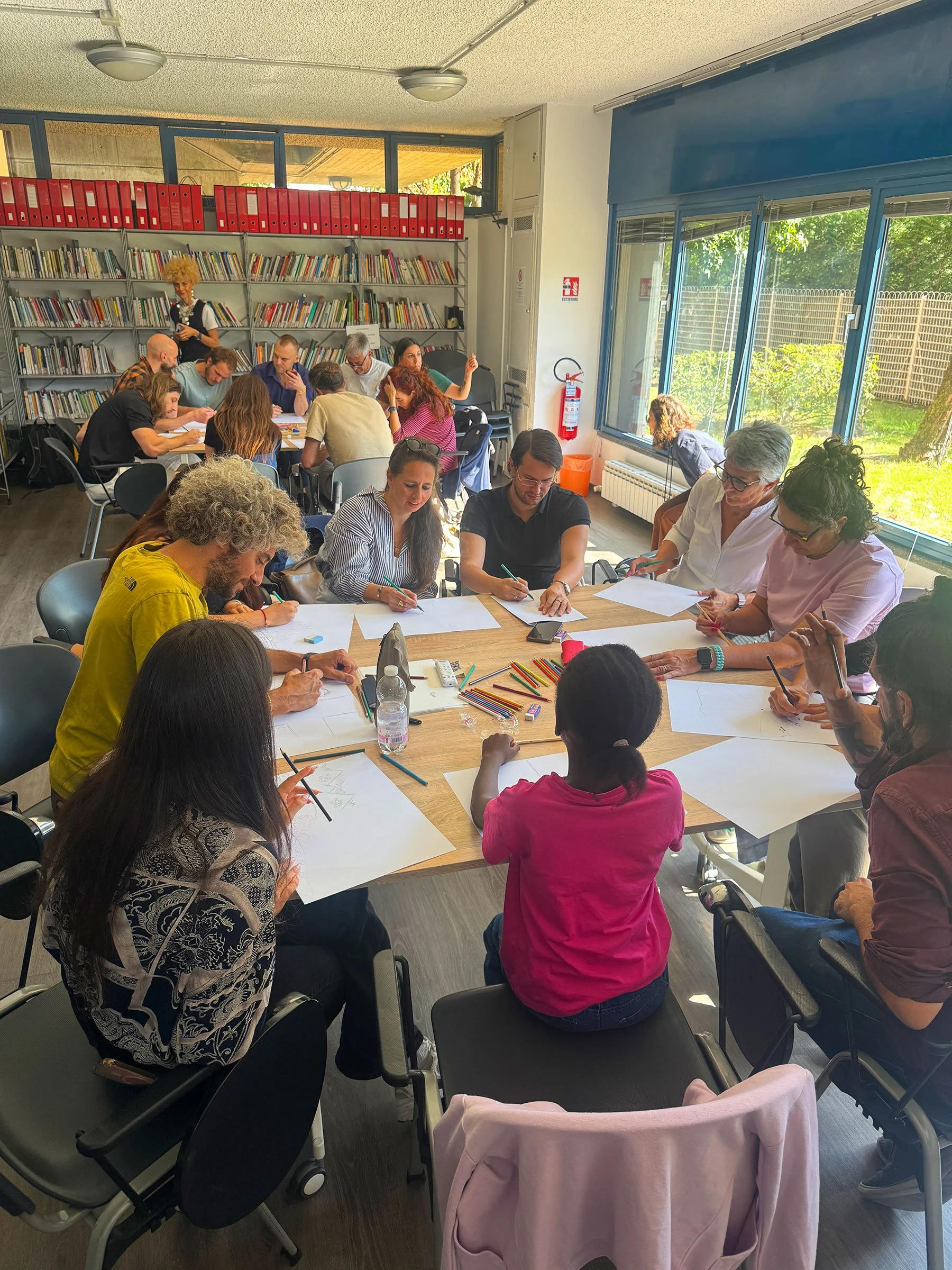
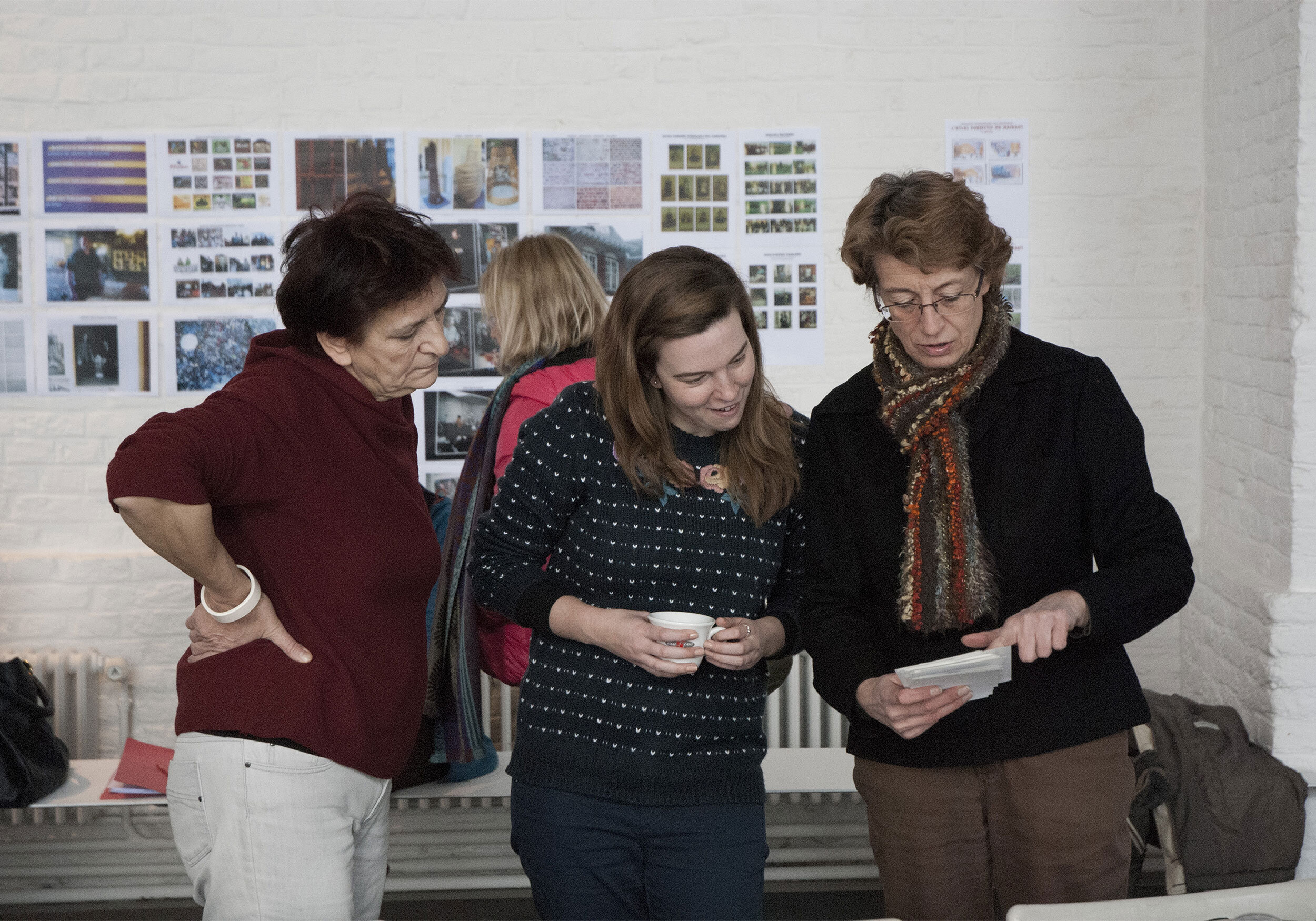
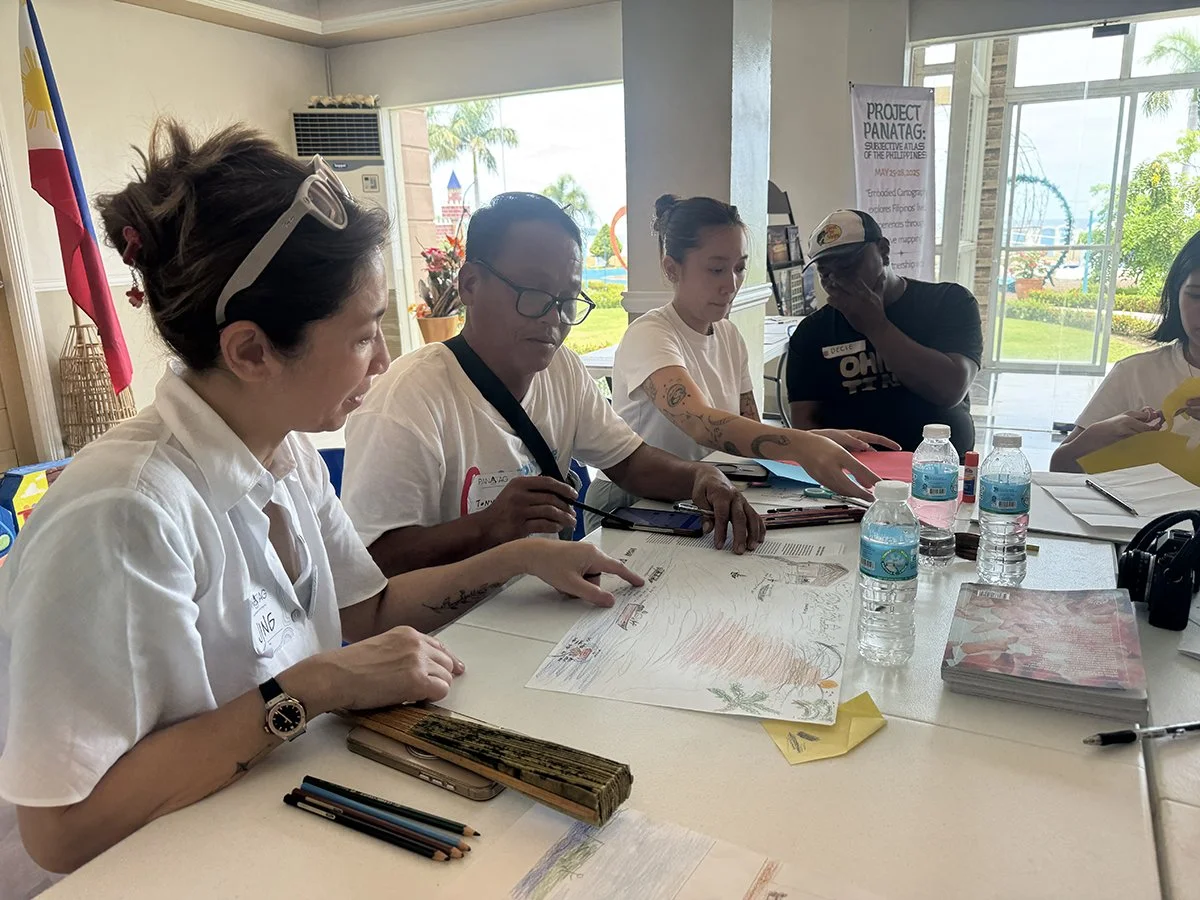
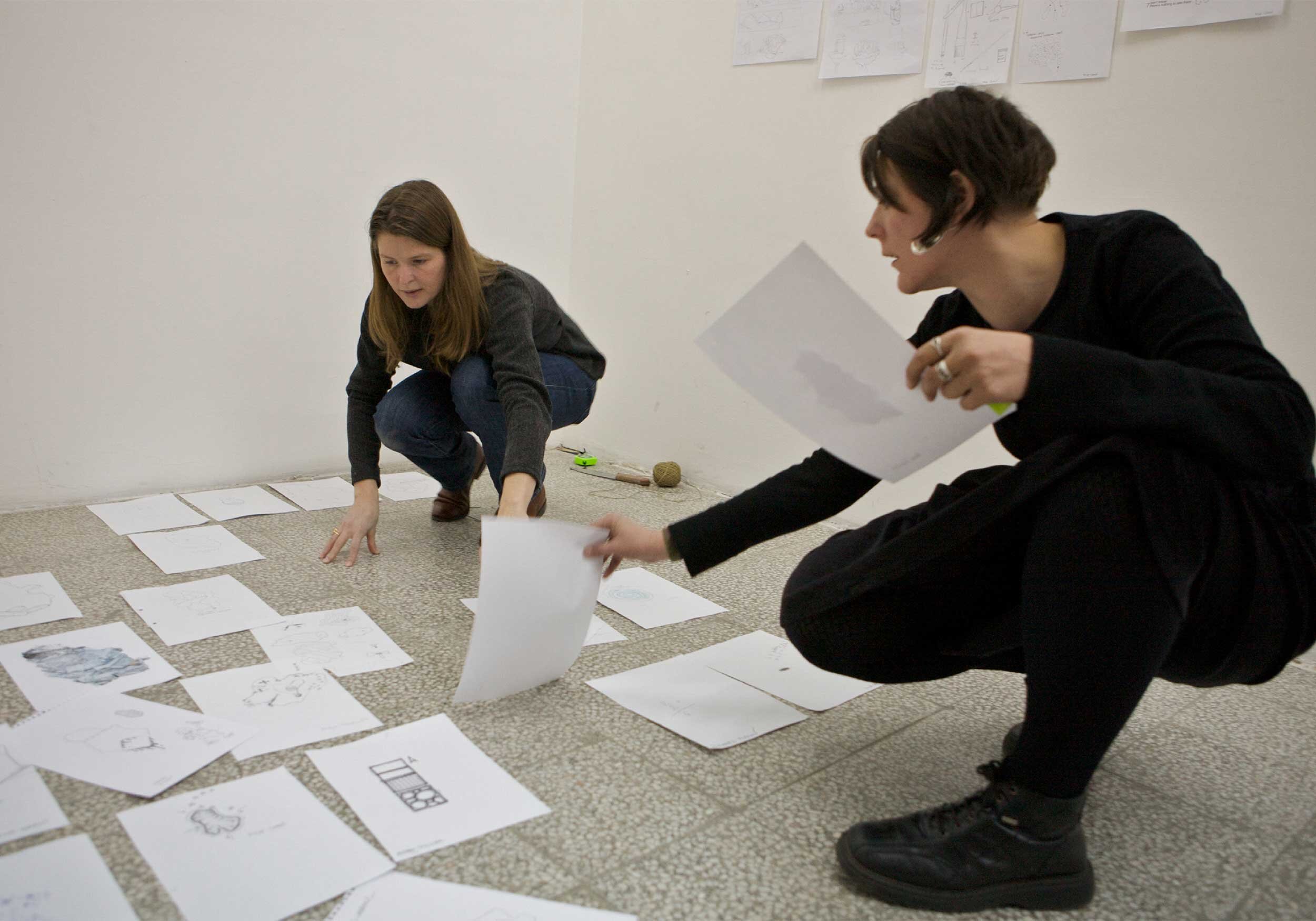
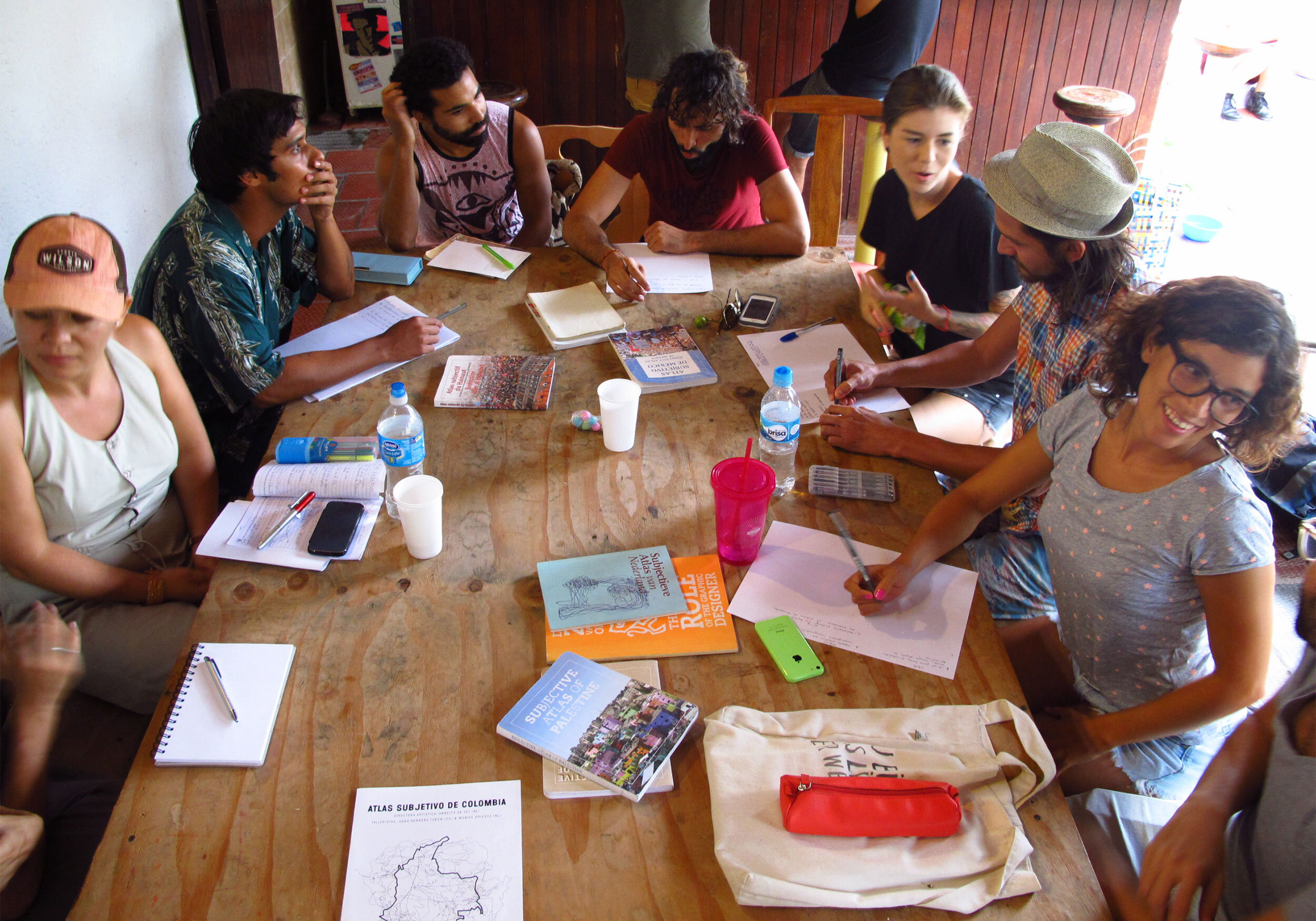
Created through participatory workshops and public activities—including exhibitions, events, and participatory sessions across the province—the project invites local communities to share their stories, becoming visible both physically and online. In seven workshops organized by the partner organizations, approximately 80 participants explored their vision of “being at home” in Groningen. Through creative sessions, they reflected on personal themes and developed visual contributions, fostering interaction and providing space for diverse perspectives and stories.
—
ISBN 978-9-46-444803-0
This publication is a result of collaboration between Subjective Editions and ARTisBOOK
Editor-in-chief: Annelys de Vet
Research, development and editing: Pieter Augustijn, Ruby de Vos, Jedidja Smalbil
Preface: Pieter Augustijn, Ruby de Vos
Introduction: Wilbert van de Kamp
PCRC & Subjective Editions, 2025
Bosnian-English, 192 full-colour pages, 16.5 x 22 cm
—
The Subjective Atlas of Bosnia and Herzegovina brings together over eighty personal mappings from people living in a country long defined by outsiders—reduced to entities, ethnic categories, and wartime narratives. This atlas counters such simplifications with a polyphonic cartography: visual stories that show how people inhabit, remember, and imagine this place today.
Created through participatory workshops across Bosnia and Herzegovina, the contributions use drawing, collage, and photography to create alternative mappings of a conflict affected state. Rather than offering a fixed or objective account, these situated mappings aim to feel the country—through the materialities of war-damaged buildings, the taste of homemade juices, and the joy of small acts of kindness.
In a landscape where trauma lingers and political inertia persists, this publication opens space for critical imagination. It invites us to see Bosnia and Herzegovina not as divided, but as a layered place of entangled histories and resilient futures—mapped from within.
—
ISBN 978-9-46444-802-3
This publication is a result of a collaboration between Subjective Editions, Newcastle University and PCRC
Editor-in-Chief: Annelys de Vet (Subjective Editions)
Editorial support: Sana Gobbeh, Anita Karabašić, Paul Lowe, Tatjana Milovanović, Ivana Perić, Theresa Rauch, James Riding, Velma Šarić, Amina Sejfić
Foreword: Velma Šarić
Introduction: James Riding
010 Publishers, 2007 & Subjective Editions (re-print), 2024
English, 160 full-colour pages, 16.5 x 22 cm
—
Sublime landscapes, tranquil urban scenes, frolicking children; who would associate these images with Palestine? All too often the Western media show the country’s gloomy side, and Palestinians as aggressors. It is this that makes identifying with them virtually impossible. If we are to relate to the Palestinians other images are needed, images seen from a cultural and more human vantage point.
Palestinian artists, photographers and designers have mapped their country as they see it. Given their closeness to the subject, this has resulted in unconventional, very human impressions of the landscape and the architecture, the cuisine, the music and the poetry of thought and expression. The drawings, maps and photographs reveal individual life experiences. The contributions give an entirely different angle on a nation in occupied territory. In this subjective atlas it is the Palestinians themselves who show the disarming reverse side of the black-and-white image generally resorted to by the media.
—
ISBN 978-906-450-648-2
EDITOR: Annelys de Vet
CURATOR: Khaled Hourani (International Academy of Arts Palestine)
CONTRIBUTORS: Sameh Abboushi, Majd Abdel Hamid, Senan Abdelqader, Mohammed Amous, Tayseer Barakat, Sami Bandak, Baha Boukhari, Mahmoud Darwish (poem), Reem Fadda, Shadi Habib Allah, Majdi Hadid, Shuruq Harb, Dima Hourani, Khaled Hourani Munther Jaber, Khaled Jarrar, Abed Al Jubeh, Hassan Khader (foreword), Yazan Khalili, Suleiman Mansour, Basel Al Maqousi, Sani P. Meo, Inas Moussa, Hafez Omar, Hosni Radwan, Awatef Rumiyah, Ahmad Saleem, Shareef Sarhan, Majed Shala, Sami Shana’ah, Maissoon Sharkawi, Mamoun Shrietch, Lena Sobeh, Mohanad Yaqubi, Inass Yassin
Arcam & Subjective Editions, 2023
English, 192 full-colour pages, 16.5 x 22 cm
—
Who is Amsterdam, really? This Subjective Atlas of Amsterdam presents the Dutch capital as experienced by the residents themselves. Many who call Amsterdam home—especially those most often pushed to the margins—translate their experiences into maps, drawings, photos, and graphics. You’ll see streets you’ve not yet walked down, far beyond the historical centre, through the eyes of people you may not have met, but who could be your neighbours.
These pages illustrate unsung neighbourhoods, subjective mundanities, vital criticism, and declarations of love, creating a nuanced collection that captures something difficult to quantify or make tangible: how cultures shape a city.
Initiated by the Architecture Centre of Amsterdam (Arcam), this book, and the plural realities within it, reflect on how to make the city a better place, for everyone.
—
ISBN: 9789464448016
Editor-in-Chief: Annelys de Vet (Subjective Editions)
Research, Development, and Editing: Anne Vera Veen (Arcam), Wouter Stroet
Introductions:Najah Aouaki, Indira van ’t Klooster, Anne Vera Veen, Annelys de Vet
Subjective Editions, 2018
English, 192 full-colour pages, 16,5 × 22 cm
Brussels is an amalgam of juxtapositions: a place that inspires you to dream away on sultry summer nights before hitting you with its rough reality the next day. It is a city that you slowly fall in love with until you can no longer imagine wanting to live anywhere else. However, it’s a special kind of love, a kind of love that keeps you critical, a kind of love that keeps you questioning the space that you inhabit as you wonder how we as a community can do better.
This Subjective Atlas of Brussels showcases the work of designers, artists and other creative minds who all share this kind of love for Brussels, depicting the diverging narratives and histories of different spaces, allowing us to dwell on the fascinating snapshots that make up this great metropolis. Discover how more than 80 Brusseleirs have mapped what this capital means for them at this moment in time.
—
ISBN 078-908-291-990-5
EDITOR IN CHIEF: Annelys de Vet
EDITORIAL TEAM: Petra van Brabandt, Margrit Coppé, Lisemarie van Loon (intern), Erika Sprey, Kurt Vanbelleghem
INTRODUCTION: Melat Gebeyaw Nigussie
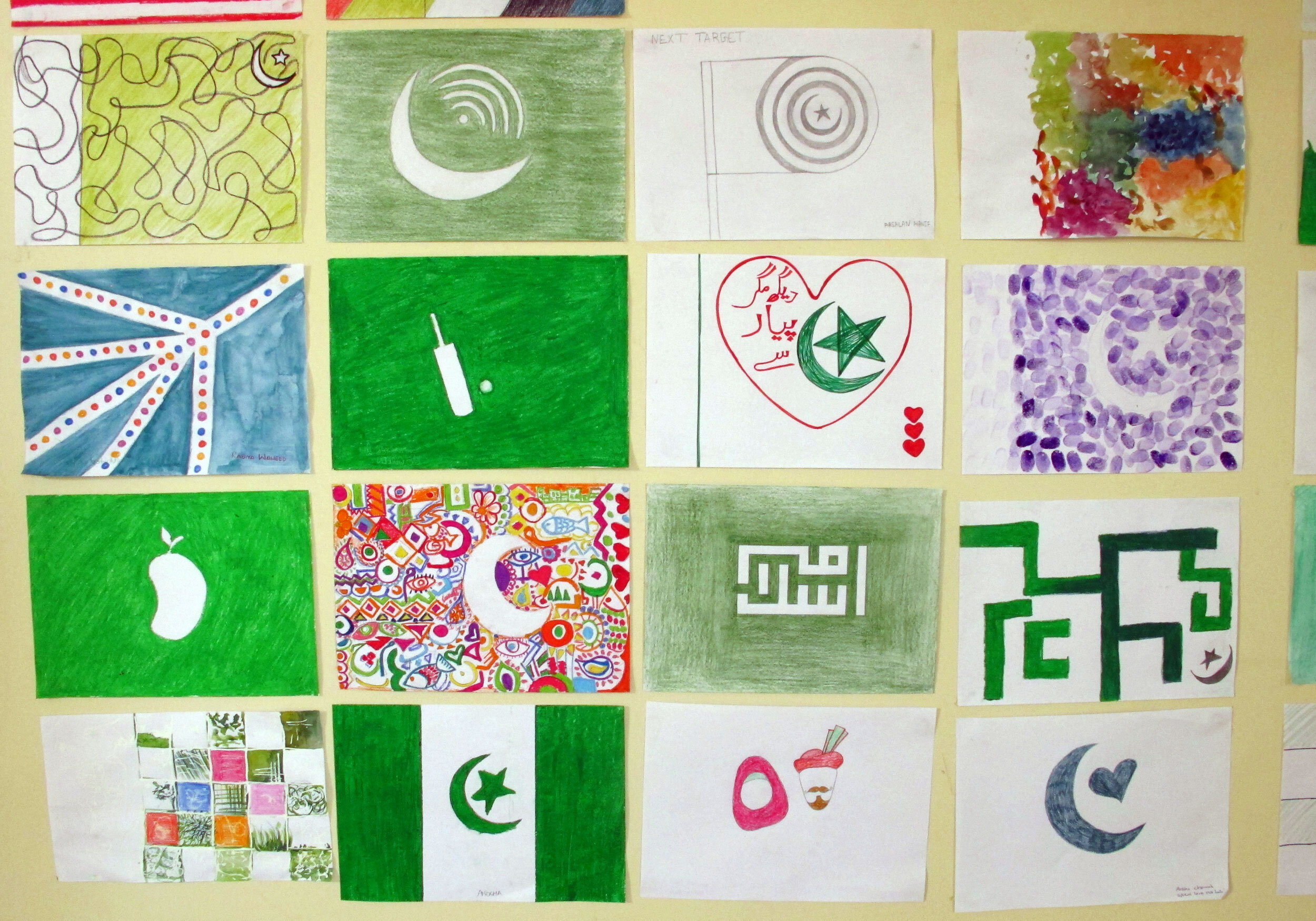
Subjective Editions & University of Karachi, 2018
English, 208 full-colour pages, 16.5 x 22 cm
—
What and who do we talk about when we speak of ‘Pakistan’ and the ‘Pakistani’? This question was posed to more than eighty artists, designers, and other creative souls across Pakistan. They responded with maps, inventories, photographs and drawings that explored the multifaceted microcosm of their real and imagined lives. These investigations will take you through the labyrinths of cityscapes, hidden lairs beneath layers of domes, nationalist rants, fictional propaganda, and corporate deceptions.
This book revels in the unexpected and the overlooked, the hidden and the mysterious, the obscure and bizarre. Through these compelling contemporary cartographies, the Subjective Atlas of Pakistan offers a humanised vision of ongoing conflicts pacified through visual poetics of personal stories, fears, hopes and dreams.
—
ISBN 978-908-291-991-2
EDITOR-IN-CHIEF: Annelys de Vet
CURATOR: Taqi Shaheen
EDITING AND EXECUTIVE PRODUCTION: Taqi Shaheen, Annelys de Vet
GRAPHIC DESIGN: Taqi Shaheen, Annelys de Vet, Noortje van Eekelen in collaboration with all the contributors
INTRODUCTION: Kamila Shamsie
Subjective Editions & Casino, forum d’art contemporain, 2019
English, 192 full-colour pages, 16.5 x 22 cm
—
In this Subjective Atlas of Luxembourg more than 100 creative minds with a relationship to Luxembourg map the country according to a subject close to them – whether through maps, infographics, photo series or other cartographic explorations. Their compiled subjective points of view and dots on the map are a snapshot of people allowing different influences to come together to create a pluralistic identity. That identity resembles a kaleidoscope in which particles of colour and shape are constantly shifting. The complexity of this little nation, which is a unique melting pot of ideas, attitudes and cultural inputs, deserves a detailed, profound, critical and genuine analysis.
This atlas won’t tell you to find your way, but you will encounter views from within, insider perspectives, from which you can draw your own conclusions. The multitude of visual voices in this atlas present other realities that help to make us understand the specificity and sensitivity of Luxembourg society. It challenges to develop new languages to speak about who we are and how we can relate.
—
ISBN: 978-946-396-345-9
EDITOR-IN-CHIEF: Annelys Devet
RESEARCH AND EDITING: Véronique Kesseler, Lucie Majerus, Giacomo Piovan
INTRODUCTION: Anne Schaaf
GRAPHIC DESIGN: Alix Bouteleux, Annelys Devet in collaboration with all the contributors
Subjective Editions, 2022
Lithuanian-English, 252 full-colour pages, 16.5 x 22 cm
—
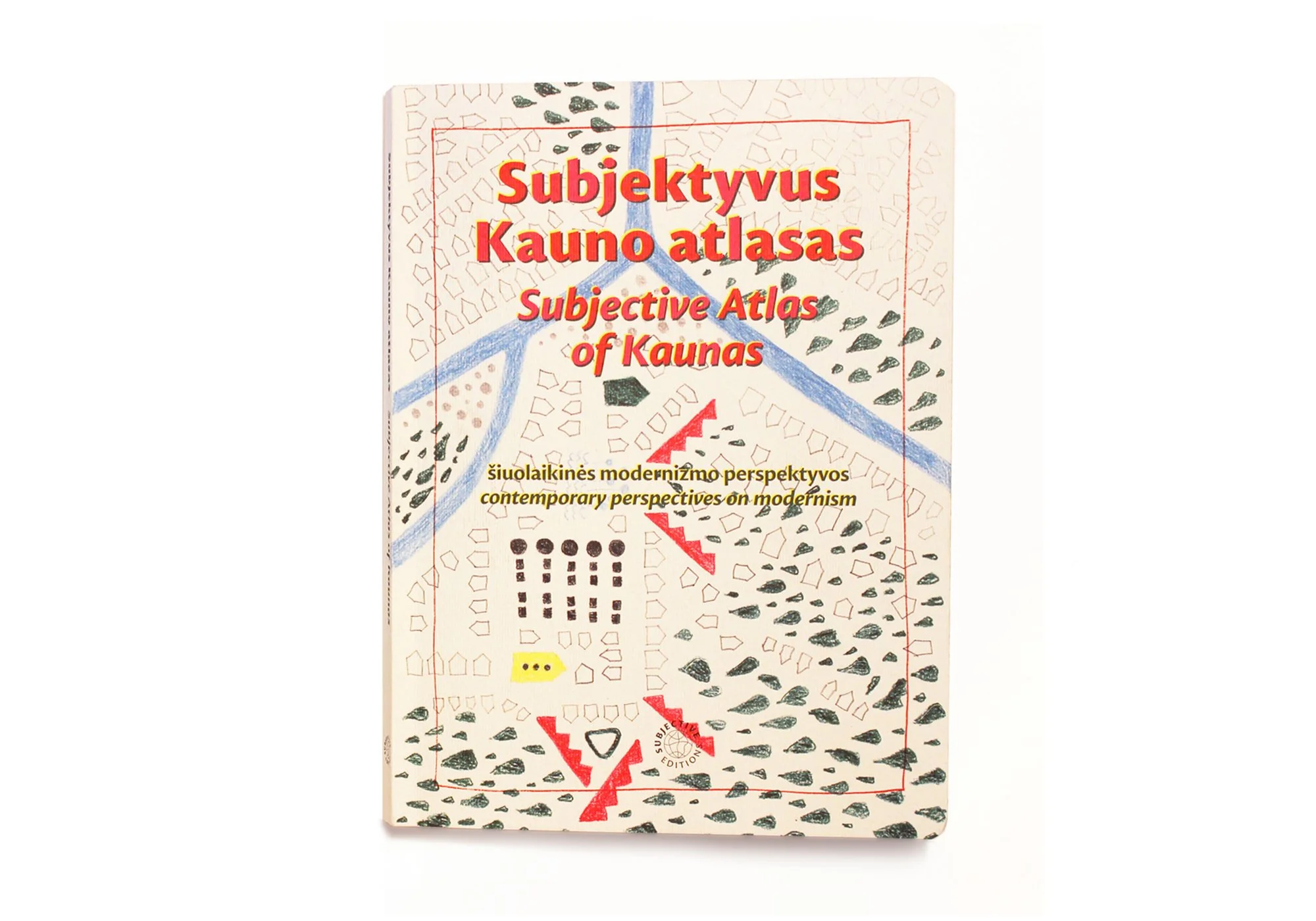
Kaunas’ status as a temporary capital of Lithuania (1919-1940) gave rise to a massive boom in construction. The city’s Modernism is more than an architectural style of the past: it is also a way of living, a synonym for cultural production and a spirit of novelty. Invited by the Modernism for the Future program (part of Kaunas European Capital of Culture 2022), a group of almost 40 creative residents mapped Kaunas’ contemporary identity through their personal interests, experiences and domesticity.
This Subjective Atlas of Kaunas showcases a surprising collection of urban, natural and everyday spaces and artefacts. Together they invite us to reflect on how this material and immaterial Modernist heritage is perceived, appreciated, disliked, lived with, lived at, observed, ignored and associated with. Could the city’s bright past become an inspiration for a more inclusive future?
—
ISBN: 978-9464448009
EDITOR IN CHIEF: Annelys Devet
EDITOR: Hugo Herrera Tobón
EDITORIAL TEAM: Arielė Tarasevičiūtė, Kazimieras Jasaitis (creative); Emilija Bučytė, Laimonas Statkevičius, (darbas su bendruomenėmis community); Gabrielė Eidimtaitė, Diana Jotautaitė, Evelina Šalnaitė (interns); Patricija Dobrovolskytė, Brigita Kazlauskaitė, Emilija Stepšytė, Milda Švėgždaitė (illustration volunteers), in collaboration with all the contributors
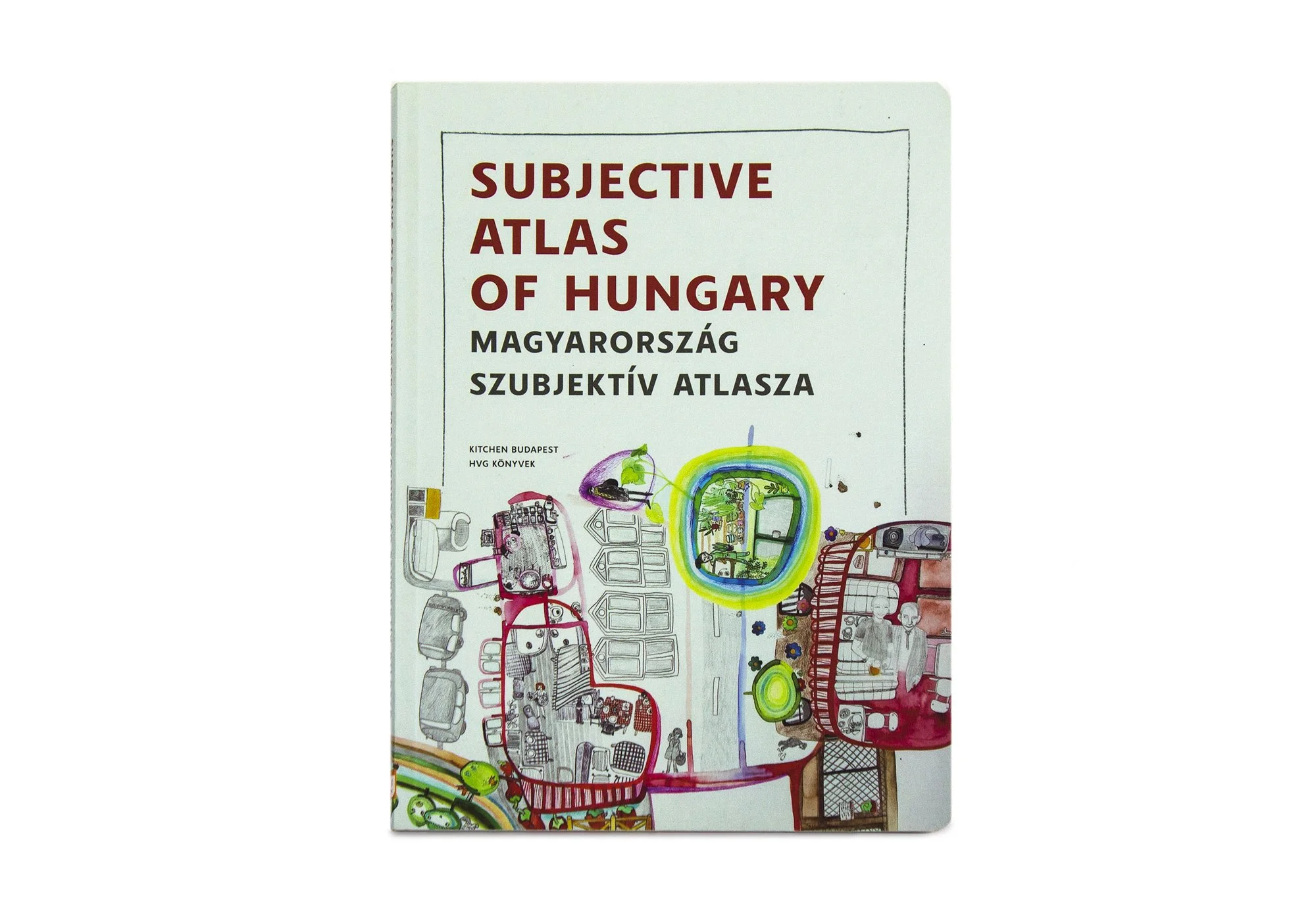
Kitchen Budapest, HVG Könyvek, 2011
Hungarian-English, 192 full-colour pages, 16,5 × 22cm
—
Is it possible to draw a portrait of contemporary Hungary with only one pencil, hold by many? Could we map its controversial optimism and pessimism, proud and poetry in one single book? Fifty young visual authors were invited to put Hungary in perspective. Rather than folkloristic clichés, the authors present disarming personal visions based on involvement. Bound together they shed light on today’s spirit; from the most characteristic vernacular buildings to waterside houses and recycled fences, from the best and worst things in life to innocent nursery rhymes and national fraud, from wine spritzer and salty sticks to vegetable gardens and soldout products. These unconventional stories together express the way cultural identity is continuously in motion, influenced from many sides, and multicultural by definition. As Lajos Parti Nagy puts it in his introduction: “Whoever encounters this strange and self-evident book, can learn strange and self-evident things about Hungary.”
—
ISBN 978-963-304-058-4
CONCEPT & EDITING: Annelys de Vet
CURATOR & EDITING: Bujdosó Attila
GRAPHIC DESIGN: Borsa Aliz, Annelys de Vet with the assistance of Anna Kasnyik and in collaboration with all contributors
INTRODUCTION: Parti Nagy Lajos
Last publishers, 2012
Spanish-English, 192 full-colour pages, 16.5 x 22 cm
—
The contradictory traits of an identity that is in continuous growth is reflected in this subjective atlas. It is a catalogue—always unfinished—of our likenesses and differences as Mexicans, questioning the collective values that we share, and the cultural image that we build around us. A varied group of artists, designers, photographers and other sensitive souls, chose personal topics as a starting point to map their cultural identity. The uncommon connections made in these visual inventories and representations reveal views that usually remain invisible. In the context of the Subjective Atlas of Mexico everyday practices suddenly take on new meanings. Through its pages the scope of Mexico as a country limited by its borders and its latitudes, vanishes to make senses and perspectives burst. We can find Mexico reflected in the world, and the world reflected in Mexico.
—
ISBN : 978-6077818403
The Subjective Atlas of Mexico was initiated by Moniek Driesse and Analía Solomonoff, who conducted workshops in Casa Vecina (México D.F., august 2009), Ule (Mérida, Yucatán, May 2010) and Iago (Cd. De Oaxaca, july 2010). For the last workshop at AAVi (Ciudad de Méxcio D.F., october 2010) Annelys de Vet joined. It was made possible thanks to the financial support of the Mondriaan Stichting in the Netherlands.
EDITOR-IN-CHIEF: Annelys de Vet
COORDINATION: Moniek Driesse, Analía Solomonoff
GRAPHIC DESIGN & EDITING: Moniek Driesse, Annelys de Vet, in collaboration with all participants
EDITORIAL COORDINATION: Analía Solomonoff (LAST), Moniek Driesse
PRODUCTION DVD: Diego Gutiérrez
TEXTS: Chiara Arroyo, Fernando Martín Juez, Annelys de Vet
Semana Libros, 2015
Spanish-English, 192 full-colour pages, 16.5 x 22 cm
—
As a whole, the works compiled in this volume constitute an unconscious autobiography of Colombia’s current aspirations and fears. They reveal that the nation is at a crossroads in terms of its cultural identity, caught between socio-political commitment and poetic escape, and offer tools to engender both economic and cultural ideas and prejudices. Over 60 artists and designers form a map that traces, challenges, and vindicates what it means to live in Colombia, embodying its contemporary historical memory. The initiative was conceived by Hugo Herrera Tobón, Moniek Dreisse, and Annelys de Vet to further encourage a discussion of the nation’s complex cultural identity.
—
ISBN 978-958-589-877-6
EDITOR IN CHIEF: Annelys de Vet
EXECUTIVE PRODUCTION: Hugo Herrera Tobón, Moniek Driesse in collaboration with local producers of various Colombian institutions
GRAPHIC DESIGN AND EDITING: Hugo Herrera Tobón, Moniek Driesse, Annelys de Vet In collaboration with all participants
INTRODUCTION: Guillermo Vanegas
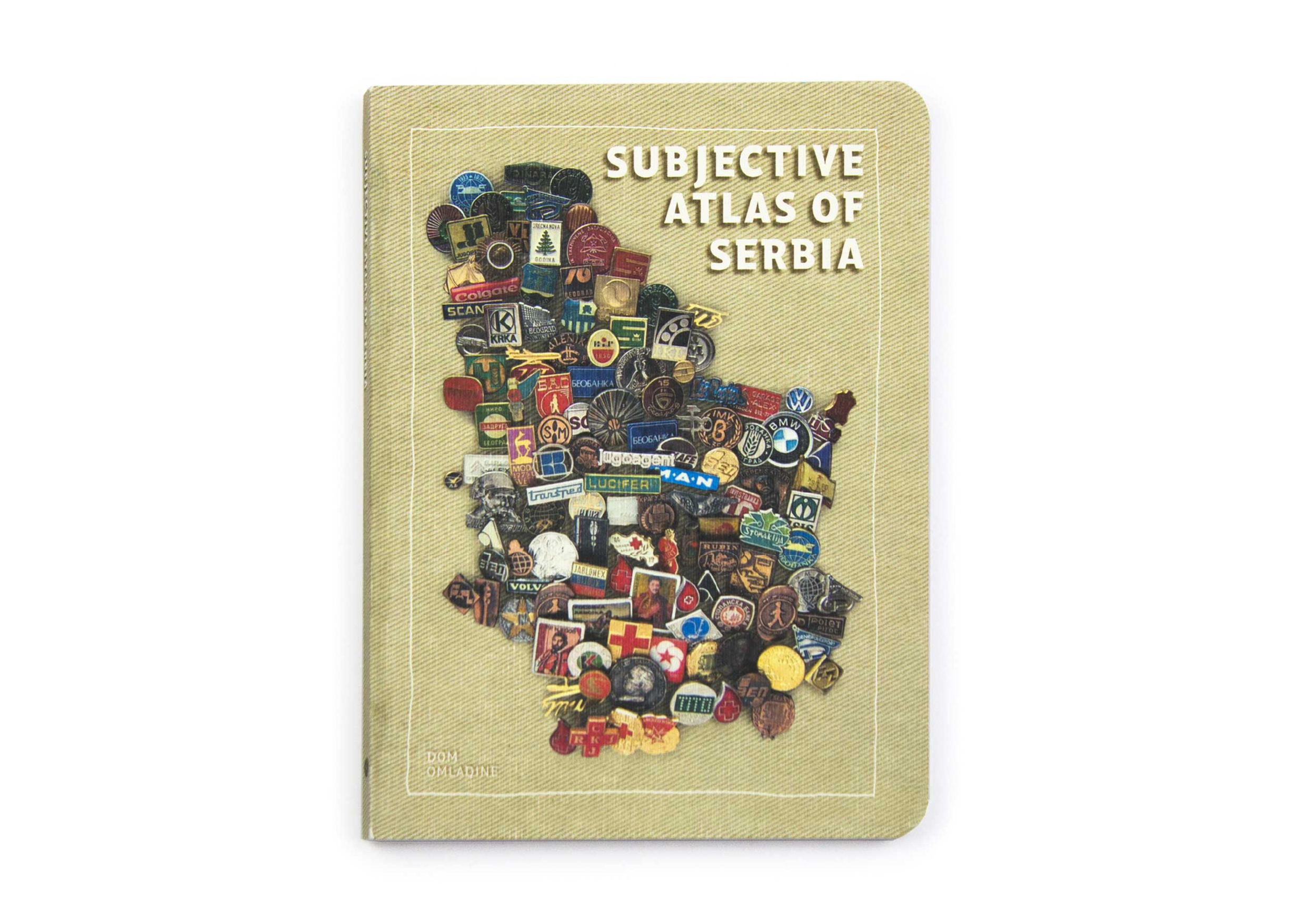
Dom Omladine, 2009
English, 192 full-colour pages, 16.5 x 22 cm
—
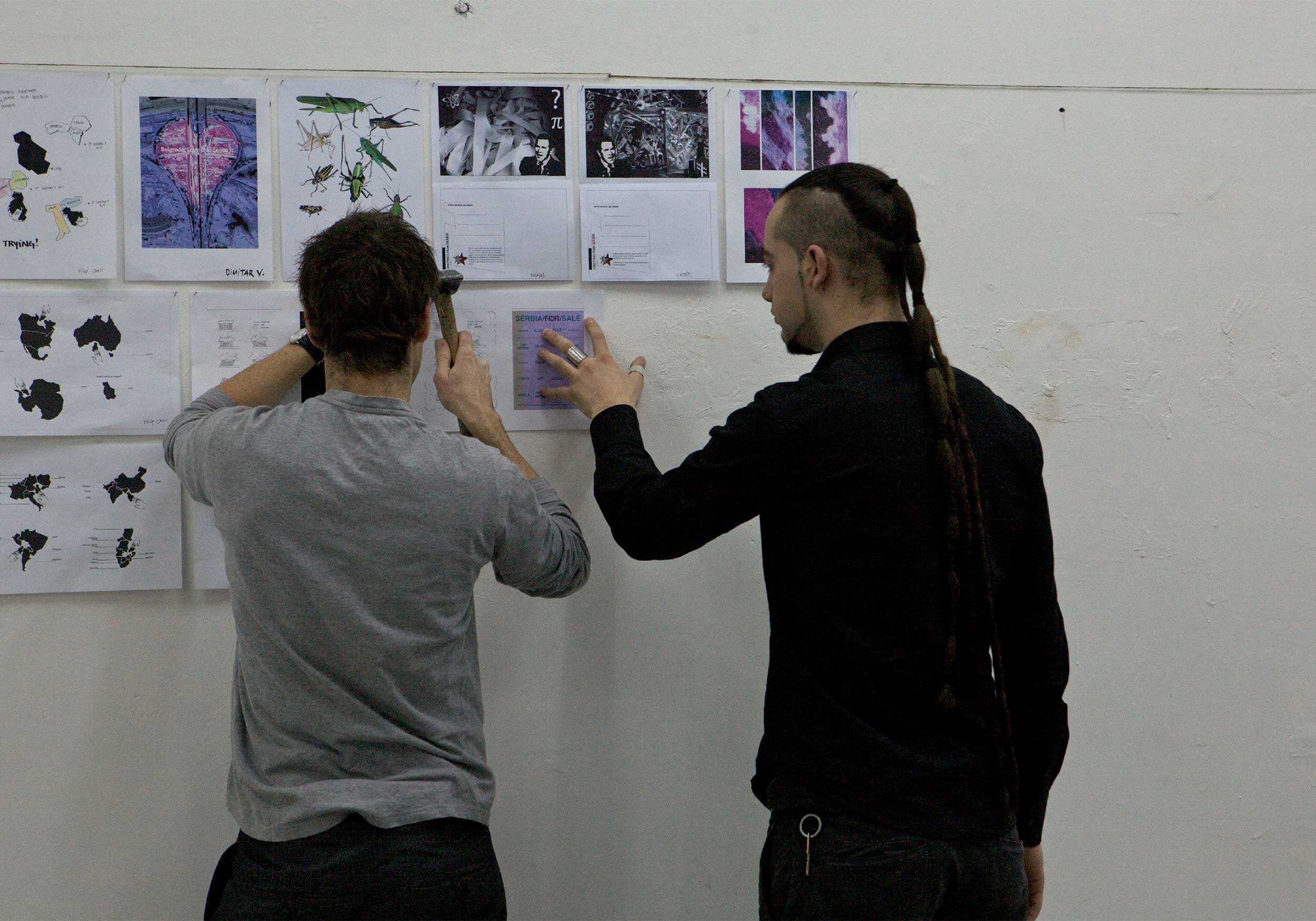
For several years, Belgrade was regarded as the epicentre of war and aggression. Today each person in Serbia has his or her own opinion on the country’s history, identity and future. As one of the authors of this atlas puts it, “I don’t know what personal is, what I am, who I am, what Serbia is. All the borders change continually; everything changes from day to day. Nationality, identity – I don’t know, I don’t know what that is.”
More than thirty young Serbian artists and designers have mapped their country from an individual perspective. Born of personal experience, the contributions portray moving stories, some cynical or critical, others intimate and vulnerable. The unconventional images offer a new insight into a nation whose identity is scattered. They do not voice opinions but share human observations. Through mapping cultural identity in this way, the atlas functions as a tool for understanding contemporary society at this place, at this moment.
—
ISBN 987-867-698-020-8
The Subjective Atlas of Serbia is an initiative of De Balie in Amsterdam, Dom Omladine in Belgrade, and Annelys de Vet. It was made possible thanks to the financial support of the Netherlands Foundation for Visual Arts, Design and Architecture. Most of the work was done during a workshop held at Magacin in November 2008.
EDITOR IN CHIEF: Annelys de Vet
PRODUCTION: Dom Omladine (Marija Kovač)
INTRODUCTION: Vladimir Arsenijević
BIS Publishers, 2005
Dutch, 192 full-colour pages, 14,5 × 21cm
—
The image of the Netherlands is unstable. Old pictures aren’t sufficient anymore and new ones are being searched for. More then a dozen students of the Design Academy Eindhoven have mapped the Netherlands with its habits, citizens, culture and language. Personal involvement and interest always as a starting point.
By means of graphs, indexes, photographs, drawings and maps the lowlands are put in perspective. From bicycle tales and weapon export, to zapping from brand to brand and concerning gentle forgotten guilders. From inland country and fears, to foreign countries and dreams. These non-conventional pictures give a surprising insight in what binds the Dutch.
—
ISBN 906,369,119-X
This atlas has been made by students of Design Academy Eindhoven, department ‘Man & Communication. In the turbulent spring of 2005 Annelys de Vet (tutor) asked them to map the Netherlands, based on personal involvement. Over the summer they collaborated to edit all towards this inspiring book, published by BIS Publishers.
CONCEPT & DESIGN: Annelys de Vet
INTRODUCTION: Lidewij Edelkoort
AFUK, 2013
Dutch&Frysian-English, 192 full-colour pages, 16.5 x 22 cm
—
Fryslân-as-identity is at a critical tilting moment. Slowly the contours of the nostalgic view are disappearing and our modern-day society is starting to ask new questions. What does it mean to live in Fryslân nowadays? What characterizes the everyday life? How is the past represented in the future? An enthusiastic group of designers and visual artists that live or have lived in Fryslân has answered these questions and has mapped the province from within. The overall result is a collection of images that perhaps exposes the current soul of Fryslân. The topics range from self-sufficiency to home care, from farms to high-rise buildings, from ‘Oranjekoeken’ to visual art. Sometimes the contributions are moving, other times they show the harsh reality. Some draw lines along the horizon, right through the Frisian households. This atlas has become a poetic form of anthropology that questions the current identity of Fryslân, going beyond nostalgia and clichés.
—
ISBN 978-9062739578
CURATOR: Roelof Koster
EDITOR-IN-CHIEF: Annelys de Vet
EDITORIAL TEAM: Jan Pier Brands, Hugo Engwerda, Roelof Koster, Jenne-Pieter Stiemsma
GRAPHIC DESIGN: Jenne-Pieter Stiemsma, Annelys de Vet in collaboration with all contributors
INTRODUCTION: Max Bruinsma
Grand-Hornu Images, 2013
French-English, 192 full-colour pages, 16.5 x 22 cm
—
The Belgium province of Hainaut is a crossroad of destinies and histories. It’s a border land located on a geometric location of potential other worlds, intertwined in a surrealist reality and against a backdrop of chiming bells. It’s is a region with a rich and diverse cultural heritage, though outside it’s borders that’s frequently over looked.
In this subjective atlas more then three dozen Hainuyers show what this cultural heritage means for them as artists, designers and inhabitants. What roles do historical events play in their every-day live? What does it mean when a site is protected by the world heritage list? How does it form their contemporary reality Rather then folkloristic clichés, the visual authors of this atlas present personal, sensitive and at times razor-sharp visions. In this way the Subjective atlas of Hainaut is a poetic form of antrophology, offering a new insight in the barely tangible aspects that make a culture both characterististic and in continuous change.
—
ISBN 978-296-012-681-5
The recognition of twenty sites and events in the Province of Hainaut as UNESCO World Heritage served as the catalyst for creating this atlas. In collaboration with the organisations connected to these sites, we organised more than eight workshops with people who hold a personal relationship to them.
EDITORIAL TEAM: Moniek Driesse, Annelys de Vet.
PARTNER: Grand-Hornu Images, Féderation du Tourism Wallonie
GRAPHIC DESIGN: Bureau DEVET (Moniek Driesse, Rekka Fries [intern], David Ortiz, Annelys de Vet)
Self-published, 2003
English, 112 full-colour pages, 14.5 × 21 cm
—
The EU is a set of agreements of a growing union. This political concept is at a far distance of the citizens themselves. If we can’t relate to it, we won’t be able to influence it either. The true Europe is based on culture. To feel attached we need to distinguish and preserve the differences. We have to construct new narratives. Not in order to change, but to be able to exchange the alternating perceptions of cultural concepts, and to stay at a safe distance of the magnetic fields of mass-media.
The subjective ‘Atlas of the European Union, from an Estonian point of view’ is a compilation of actual thoughts and views of more than thirty young Estonian designers. They have used their own fascinations to map their European Union.
—
This atlas is the result of a 3-week workshop at the Estonian Academy of Arts held by Annelys de Vet, on the invitation of Kristjan Mändmaa, 13 – 31 october 2004. The atlas was printed in an edition of 500 and launched together with an exhibition at the end of the workshop. This project was kindly supported by the Dutch Ministry of Culture and the Royal Netherlands Embassy.
CONCEPT & DESIGN: Annelys de Vet
PROJECT MANAGER: Kristjan Mändmaa
Subjective Mapping
Press
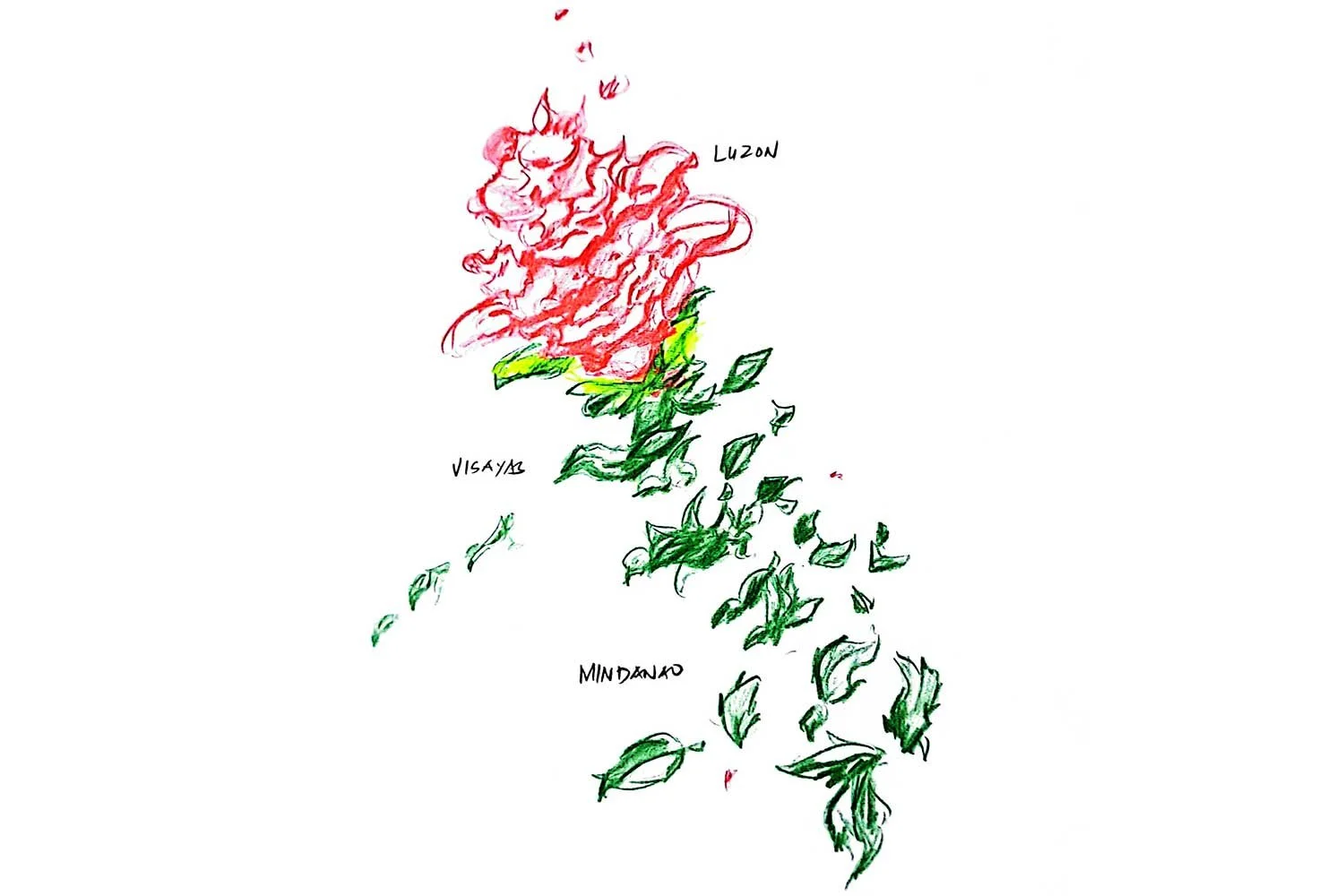
“ … they shared personal experiences like growing up as daughters of migrant workers or coming from families of farmers who’ve carried the weight of their land and sugar heritage for generations.” 🔗 The Visayan Daily Star, 4 June ’25
“… to look at our community and environment as we experience it in the present, uncoloured by preconceived notions of geographic borders or cultural divides—to see the world with a fresh set of eyes, instead of simply accepting the dominant narrative.” 🔗 Yuchengco Museum, May 2025
“… the premise of the project is to push back against singular, top-down narratives that claim to present objective truths about a region, and instead document places from the ‘bottom-up.’” 🔗 Balkan Diskurs, 6 July ’23
Are you part of a creative network that is politically engaged, socially sensitive, and in need to map other narratives?
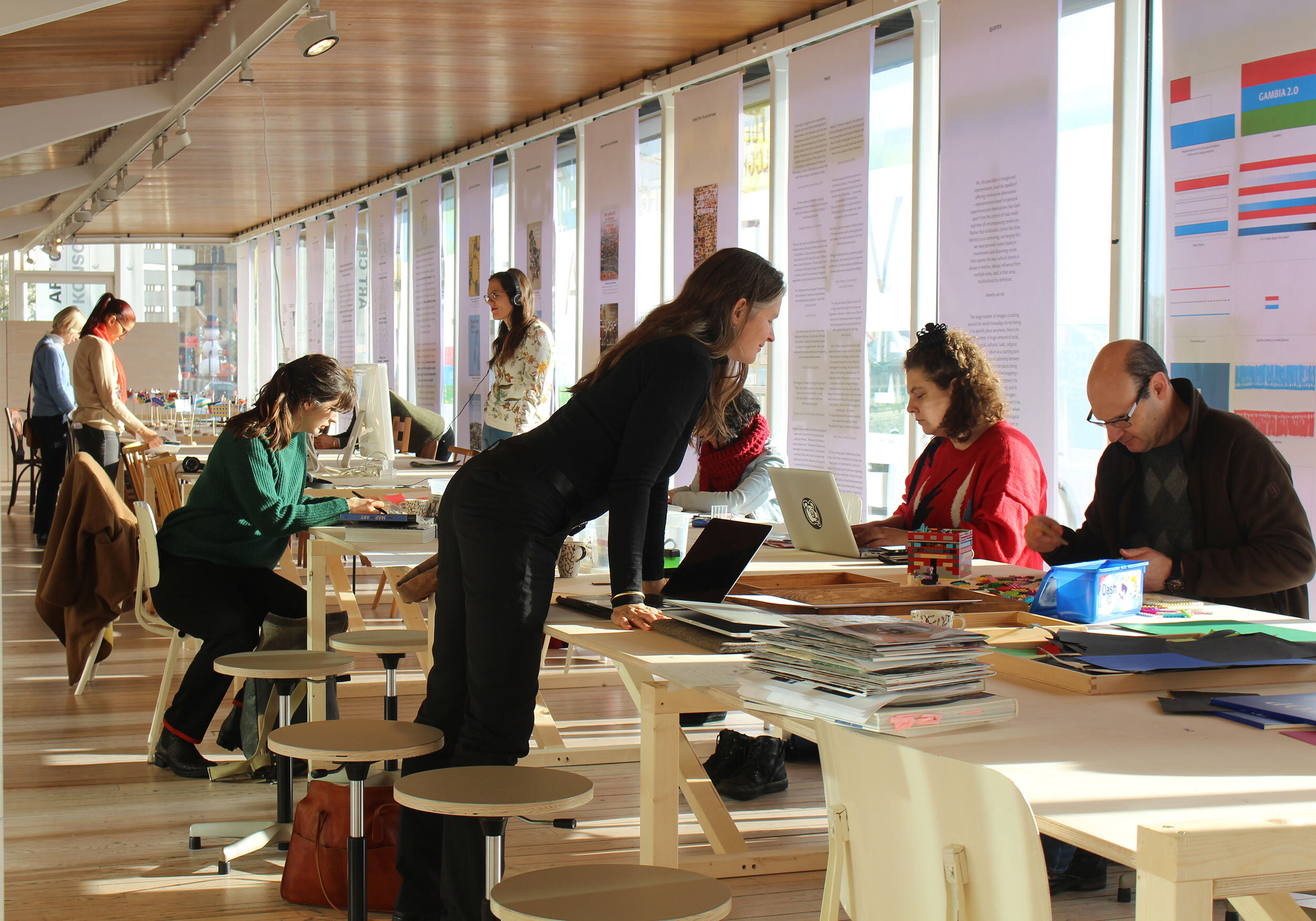
Subjective Editions is the publishing platform that develops participative production processes and distributes these engaged publications. We support communities in mapping their environments from the inside out, starting from a place-based understanding.
Subjective Editions
Multilingual-English, 8 full-colour books, 16.5 x 22 cm
Subjective Atlas of Amsterdam, Bosnia & Herzegovina, Brussels, Groningen, Kaunas, Luxembourg, Palestine and Pakistan
—
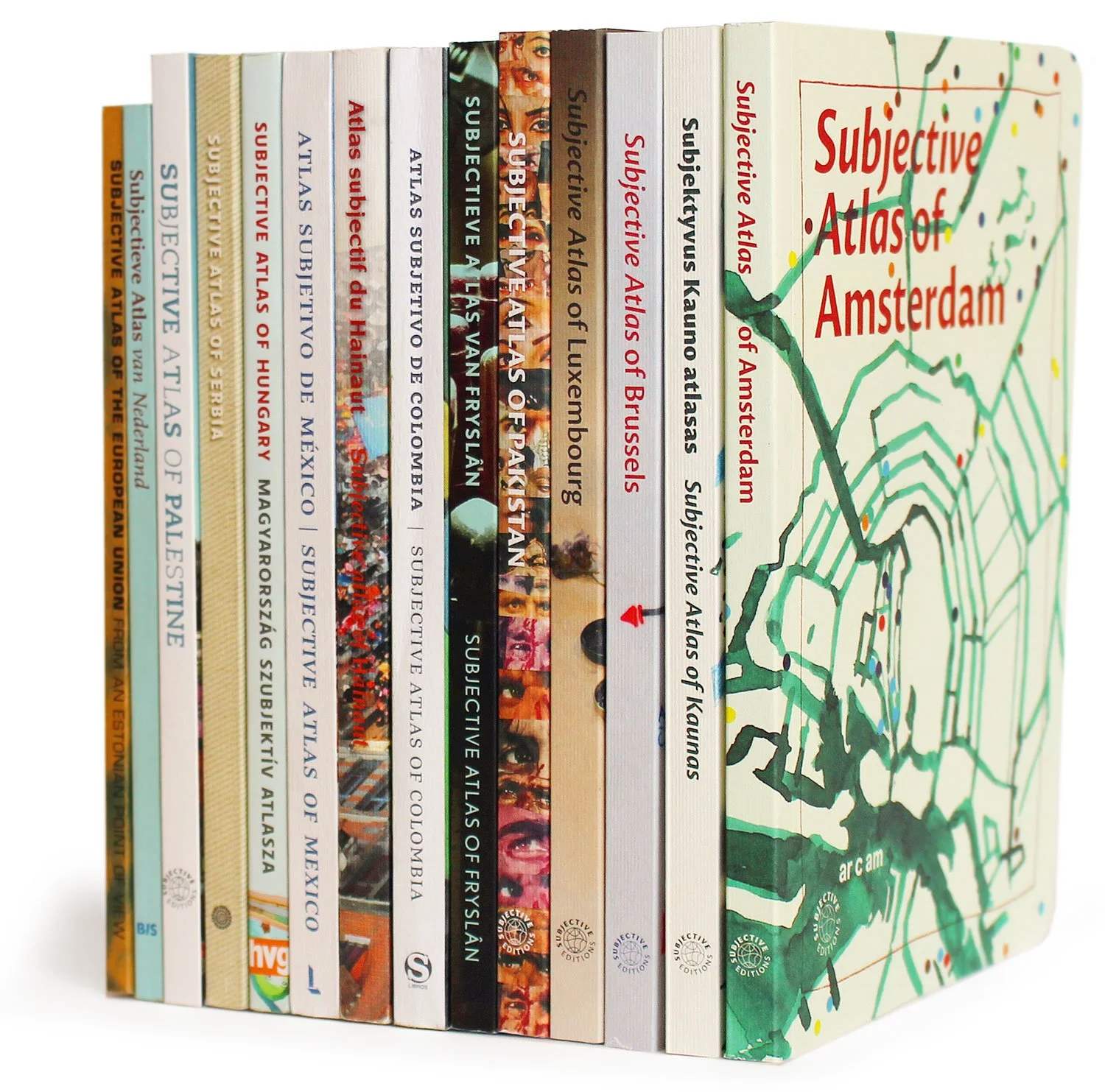
The Subjective Editions series brings together eight Atlases from different parts of the world, each rooted in specific communities, collective and personal perspectives, and lived experiences. While grounded in their own contexts, together they create a layered and polyphonic mapping of visual narratives, revealing the many ways people relate to, remember, and imagine the places they inhabit and call home.
—
Each book has been initiated by a different organisation, emerging from a distinct context and driven by its own concerns and objectives. Yet all of them challenge dominant representations and simplified imaginaries imposed by outsiders by mapping places from the inside out.
As a continually expanding archive of knowledge and creative practice, the complementary collection serves as an example of how inspiration, dialogue, and initiatives can be activated, opening up new possibilities for exchange, collaboration, and action. A series that cannot be missed in creative libraries.